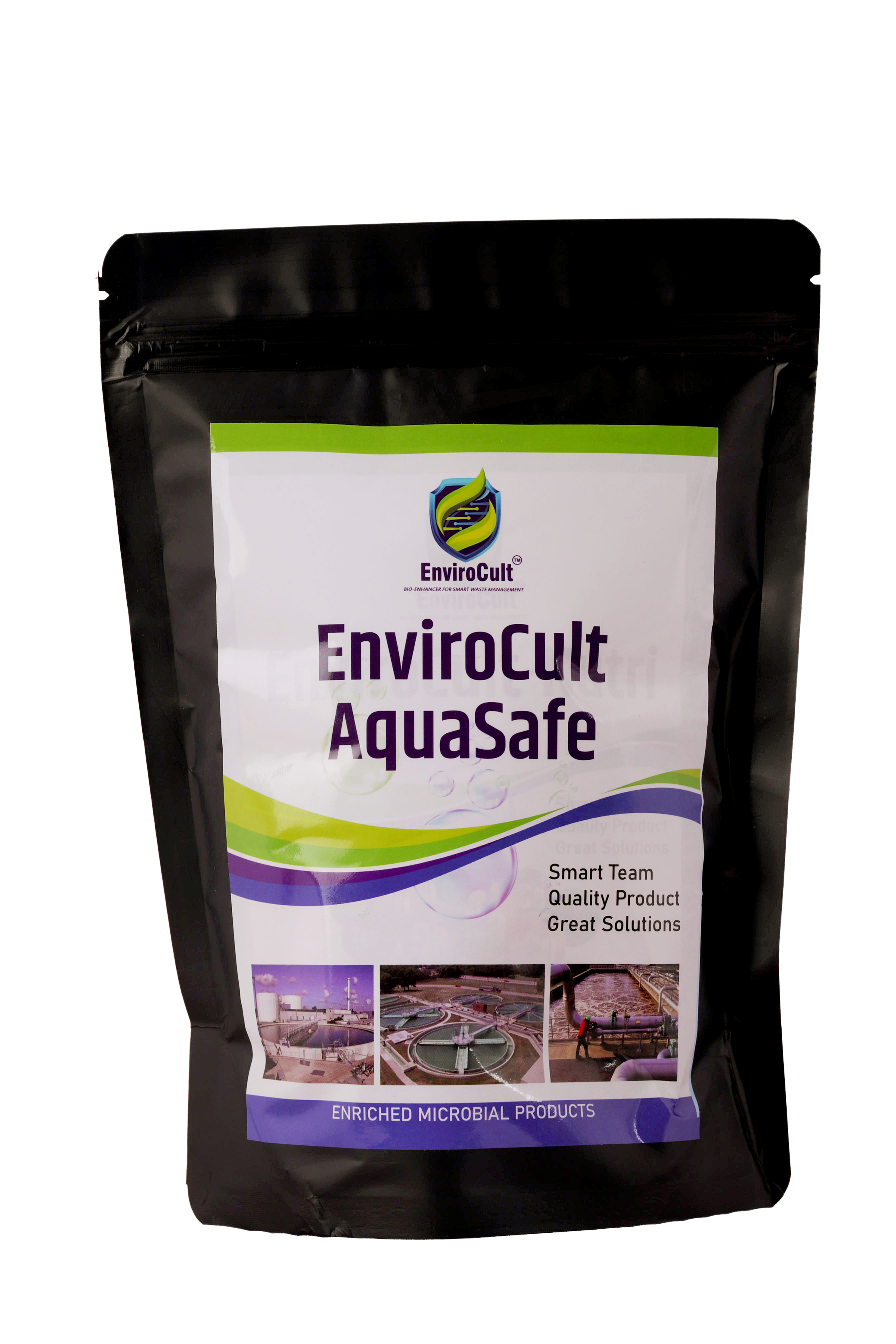
EnviroCult AquaSafe - SEW
Advanced Microbial Innovation for Cleaner, Safer Sewage Treatment
EnviroCult
AquaSafe - SEW :
A
next-generation microbial solution designed to enhance the biological treatment
process in sewage systems.
Powered by a scientifically selected consortium of high-performance bacterial strains. The bacterial count will be 10 billion CFU.
AquaSafe – SEW effectively targets and breaks down key pollutants — including Chemical Oxygen Demand (COD), Biological Oxygen Demand (BOD), suspended solids, and foul odours — within biological treatment tanks.
Designed for application in biological tanks such as aeration basins, MBBRs, SBRs, or similar systems.
AquaSafe – SEW enhances microbial activity, promotes faster breakdown of organic pollutants, and supports more stable and effective system performance.
This eco-friendly solution not only supports pollutant and odour reductions and also promotes operational efficiency and environmental sustainability.
Characteristics:
· pH : 6.5 to 7
· Colour : Pale Yellow
· Temperature Range: 15°C – 45°C (Optimal: 30–37°C)
· pH Range: 6.0 – 8.5 (Optimal: 6.8–7.5)
· Dissolved Oxygen (DO): Minimum 2.0 mg/L for optimal aerobic performance
· Retention Time: Minimum 4–6 hours in biological treatment tanks
· Substrate Type: Suitable for domestic and light industrial wastewater
Dosing:
It depends on the Organic load and Volume of Water, Based on Volume and Organic compounds
Application Method:
· Mix AquaSafe with non-chlorinated water and allow it to activate for 30 minutes before dosing
· Dose directly into the aeration tank or inlet of the biological treatment system
· Avoid use of toxic chemicals or disinfectants during and immediately after dosing
· Significant reduction in COD, BOD, and TSS
· Effective odour control during the treatment cycle
· Improved sludge settling and clarity of effluent
· Reduced operational load on secondary treatment systems
· Eco-friendly and safe for operators and the environment